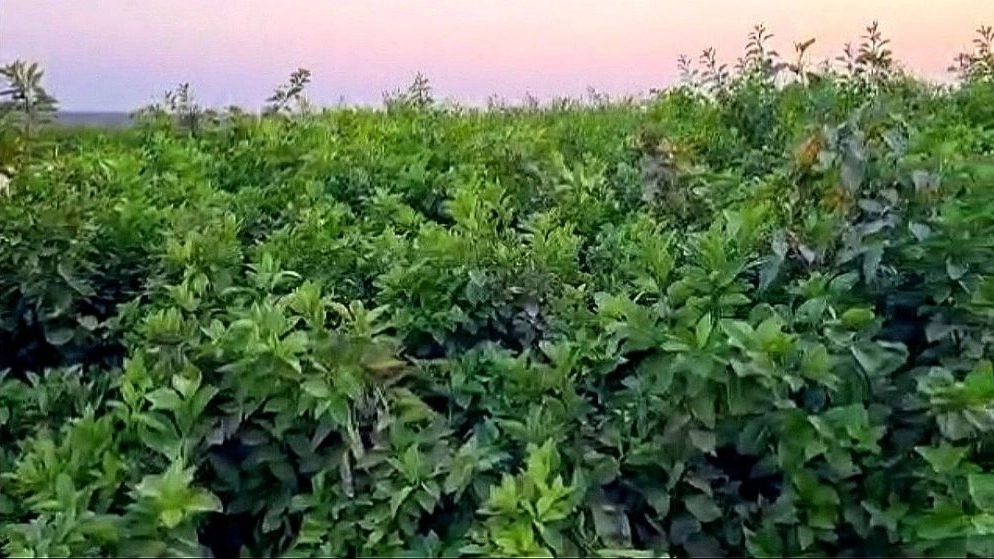
Citrus
Building a citrus garden will be very profitable in the long run. But this requires knowledge of the conditions and correct management. The information in this section can help users in optimally using the facilities and familiarizing themselves with the general tips of planting citrus fruits and watering citrus fruits, as well as determining the suitable soil for citrus fruits.
Citrus fruits include orange, grapefruit, lemon and tangerine. These products, which are among the most important agricultural products in the world, are grown in tropical and subtropical regions. Brazil and Japan are respectively the largest producers of oranges and tangerines in the world. Spain, Italy and Mexico have a major share in the production of lemons and limes, and America is the top producer of grapefruit in the world.
soil texture suitable for citrus fruits
The best type of soil texture for growing citrus fruits is loamy-sandy texture or loamy-clay-sandy texture. Very sandy soil has very little water holding capacity and causes nutrients to settle easily. Instead, clay soils cause stagnation of water and cause the roots to spread in a very limited space and ventilation is not done well.
Improper textures can reduce performance. For example: if the texture of the soil is clay, the first problem that arises is soil stagnation, which can reduce some of the danger caused by stagnation of water by constructing a drain, so by adding soil organic matter and improving the soil structure, some of the disadvantages of this texture can be reduced. reduced The soil of citrus trees should always be moist.
☑️ PH Suitable for Citrus Protesign
The acidity or alkalinity of the soil can play a role in the amount of fertilizer used. Citrus fruits can grow in a wide range of soils, but the most favorable pH for this species is between 5.5 and 7.5.
In acidic PH, trifoliate bases can be cultivated easily, but in alkaline pH, especially when PH is above 7.5 (calcareous soil), it is not possible to grow three-leafed bases such as citronmelo, pansyros, citronge, flying Dragon used.
Citrus Climate
Citrus trees have a tropical habitat and cannot tolerate extreme cold. But different types of this species differ from each other in terms of temperature range. On the other hand, the age of the tree can also affect the resistance to cold. Young trees may be damaged by a mild cold, while mature trees may be able to withstand the conditions if they are exposed to temperatures below -5 degrees for a while.
In general, areas with moderate weather where the temperature does not fall below 2 or 3 degrees in the coldest month of the year can be a suitable place for planting these plants.
It should be noted that exposure to the wind is not recommended for these plants, because the wind can cause wounds on the skin of the fruit. Therefore, in windy areas, it seems necessary to install a wind breaker.
Citrus Irrigation
In areas with rainfall of less than 700 mm per year, irrigation of the garden is necessary, and growing trees in a rainfed manner is not recommended in these areas.
However, since citrus trees are very sensitive to salt, it is recommended to avoid irrigation with water with a salinity level above 1800 microsiemens per centimeter and with a chloride level above 450 ppm.
Citrus Pests:
In order to correct the deficiency and effect of iron, sulfur and nitrate on citrus fruits, special minerals and soil conditions should be considered. Agraco is proud to offer the best citrus fertilizer with guaranteed quality.